Our Products
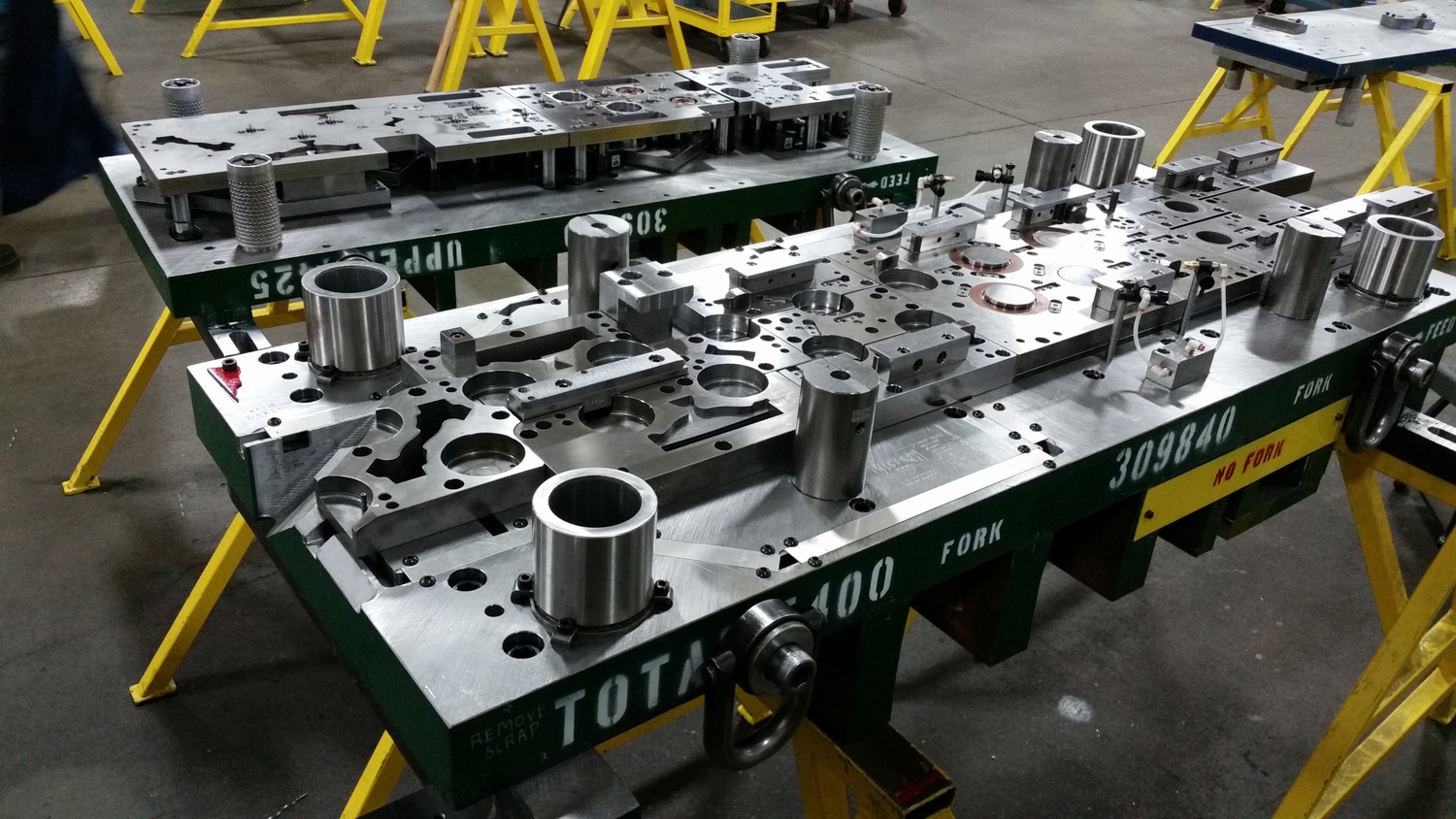
Stamping Dies
Progressive Stamping Dies
Features and Function: Our progressive stamping dies are advanced multi-station tools designed to carry out a series of sequential operations, such as punching, bending, and coining, in a single stroke. As a metal strip feeds through the die, it undergoes multiple processes, each at a different station within the die, resulting in the production of complex parts with high precision and repeatability.
Benefits: For design, process, and quality engineers, our progressive stamping dies offer unparalleled efficiency, reducing cycle times and labor costs due to their automation capabilities. The consistent quality and tight tolerances achieved with these dies are particularly beneficial for high-volume production, ensuring that every part meets the exact specifications. This efficiency and reliability translate to cost savings and higher productivity for senior technical buyers overseeing large-scale manufacturing operations.
Tandem Stamping Dies
Features and Function: Our tandem stamping dies consist of a series of single-station dies, each performing a specific operation such as drawing, bending, or trimming. Metal blanks are either manually or automatically transferred from one die station to the next, allowing for the creation of large and intricate parts.
Benefits: The flexibility offered by our tandem stamping dies is invaluable to engineers who need to manufacture a variety of part shapes and sizes. Each die station’s individual maintenance simplifies tool management and reduces downtime. For medium to high-volume production, our tandem dies provide a robust solution that balances complexity with efficiency, making them an attractive option for technical buyers focused on versatile and reliable production capabilities.
Transfer Dies
Features and Function: Our transfer dies are arranged in a line or circular configuration, with an automated transfer system moving parts between stations. These dies are particularly effective for deep drawing and creating complex part shapes. Each station within the transfer die performs a specific operation, ensuring precision and consistency throughout the production process.
Benefits: Engineers will appreciate the high precision and consistency provided by our transfer dies, which are crucial for producing large and intricate parts. The automated transfer system reduces handling and potential damage to parts, enhancing overall production efficiency. For medium to high-volume production, our transfer dies offer an effective solution that ensures quality and consistency, meeting the stringent demands of the automotive industry.
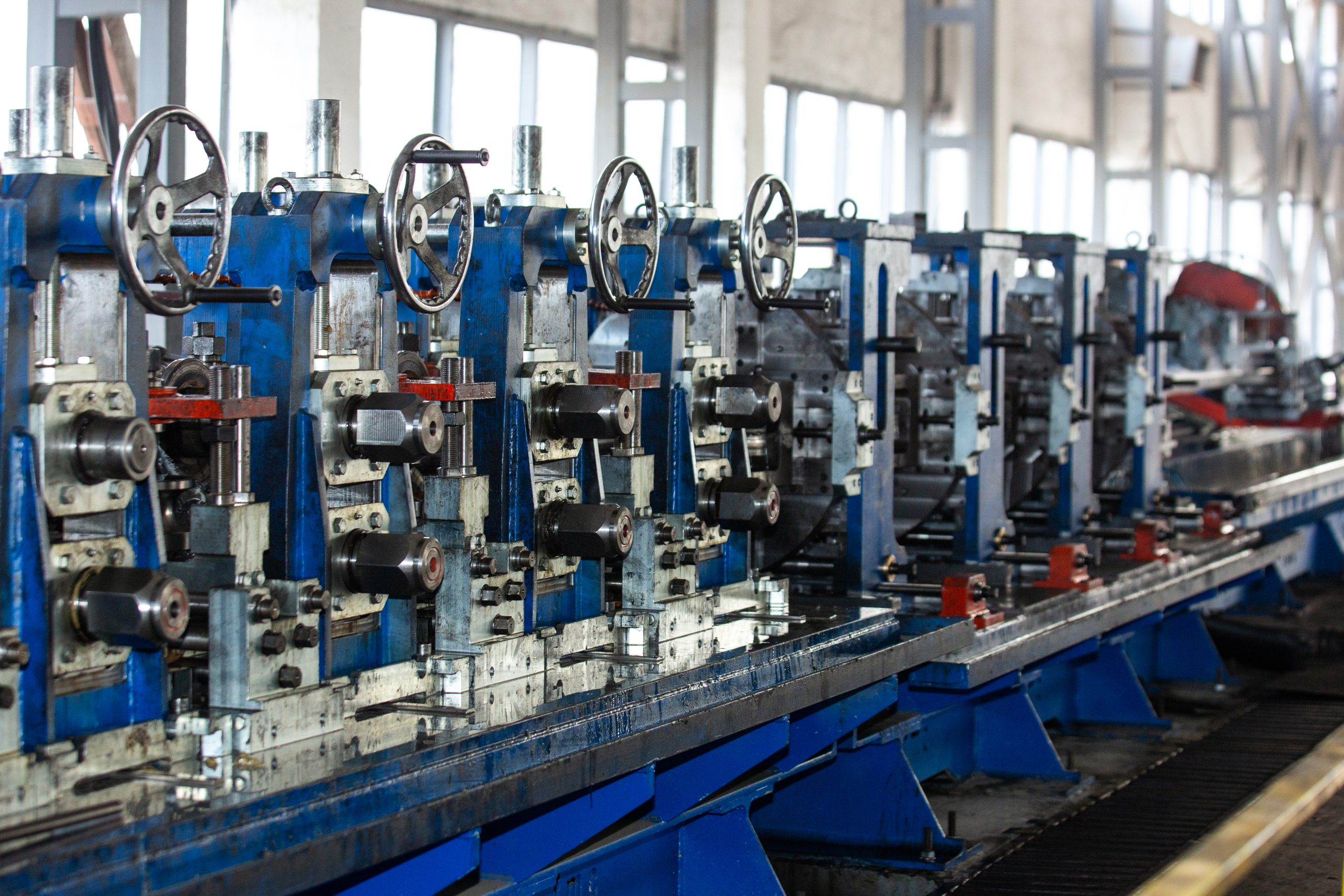
Roll Forming
Roll forming is a continuous bending operation in which a long strip of sheet metal, typically coiled steel, is passed through sets of rolls mounted on consecutive stands, each set performing only an incremental part of the bend, until the desired cross-section profile is obtained. Our roll forming solutions are designed to meet the demanding requirements of the automotive industry, providing high precision, efficiency, and flexibility for producing complex profiles.
1. Roll Forming Machines
Technical Features:
- High Precision Rollers: Our machines feature high-precision rollers that ensure consistent and accurate profile formation, even for complex geometries.
- Adjustable Roll Stands: Equipped with adjustable roll stands that can be configured to handle various material thicknesses and profile shapes.
- Material Handling System: Integrated material handling systems for efficient loading, feeding, and unloading of coils.
- Advanced Control Systems: State-of-the-art control systems with programmable logic controllers (PLCs) for precise operation and easy adjustment of machine settings.
- Durable Construction: Robust construction using high-quality materials to ensure long-term reliability and minimal maintenance.
Benefits: Our roll forming machines offer unparalleled precision and consistency, essential for producing high-quality automotive components. The adjustable roll stands and advanced control systems provide flexibility to handle a variety of profiles and materials, making them ideal for both standard and custom applications. With efficient material handling and robust construction, our machines ensure high productivity and reliability, meeting the stringent demands of the automotive industry.
2. Custom Roll Tooling
Technical Features:
- Tailored Design: Custom roll tooling designed to match specific profile requirements, ensuring accurate and consistent results.
- High-Quality Materials: Manufactured using high-grade tool steels and advanced heat treatment processes for durability and wear resistance.
- Precision Machining: Utilizes precision CNC machining to achieve tight tolerances and fine surface finishes.
- Interchangeable Tool Sets: Designed for easy interchangeability, allowing for quick changeovers and reduced downtime.
Benefits: Our custom roll tooling is engineered to deliver precise and consistent profiles, tailored to your specific needs. The use of high-quality materials and precision machining ensures long tool life and minimal wear, reducing maintenance costs and downtime. The ability to quickly change tool sets enhances production flexibility, allowing you to efficiently switch between different profiles and meet varying production demands.
3. Inline Processes
Technical Features:
- Integrated Punching and Notching: Inline punching and notching stations that allow for the creation of holes, slots, and other features during the roll forming process.
- Cut-to-Length Systems: Automated cut-to-length systems that ensure precise cutting of profiles to the desired lengths.
- Welding and Assembly: Inline welding and assembly stations for creating welded profiles and sub-assemblies directly on the roll forming line.
- Quality Inspection: Integrated quality inspection systems, including laser and vision sensors, for real-time monitoring and defect detection.
Benefits: Our inline processes enhance the efficiency and versatility of roll forming operations by integrating additional manufacturing steps directly into the roll forming line. This reduces the need for secondary operations, streamlining production and improving overall throughput. The ability to perform inline punching, notching, welding, and quality inspection ensures high-quality, finished profiles that meet the exact specifications of automotive applications.
4. Material Handling and Automation
Technical Features:
- Coil Handling Systems: Automated coil handling systems for loading and unloading coils, reducing manual labor and increasing safety.
- Conveyor Systems: Custom-designed conveyor systems for smooth and efficient material transfer throughout the roll forming process.
- Robotic Integration: Integration with robotic systems for automated part handling, stacking, and packaging.
- Smart Automation: Advanced automation solutions with IoT connectivity and real-time data monitoring for enhanced production control and efficiency.
Benefits: Our material handling and automation solutions are designed to maximize efficiency, safety, and productivity in your roll forming operations. Automated coil handling and conveyor systems streamline material flow, while robotic integration reduces manual labor and enhances precision. With smart automation and IoT connectivity, you can achieve real-time monitoring and control, optimizing your production processes and ensuring consistent quality.
5. Quality Control and Assurance
Technical Features:
- Precision Measurement Systems: Advanced measurement systems, including laser and optical sensors, for accurate profile measurement and defect detection.
- Data Logging and Reporting: Integrated data logging and reporting capabilities for tracking production metrics and quality parameters.
- Statistical Process Control (SPC): Implementation of SPC methods for continuous monitoring and control of the roll forming process.
- Traceability Systems: Full traceability of materials and production batches, ensuring compliance with industry standards and customer requirements.
Benefits: Our quality control and assurance solutions ensure that every profile produced meets the highest standards of precision and quality. With advanced measurement systems and data logging, you can monitor and control your production processes in real time, identifying and addressing issues promptly. The implementation of SPC and traceability systems provides confidence in the consistency and reliability of your products, meeting the stringent demands of the automotive industry.
Checking Fixtures
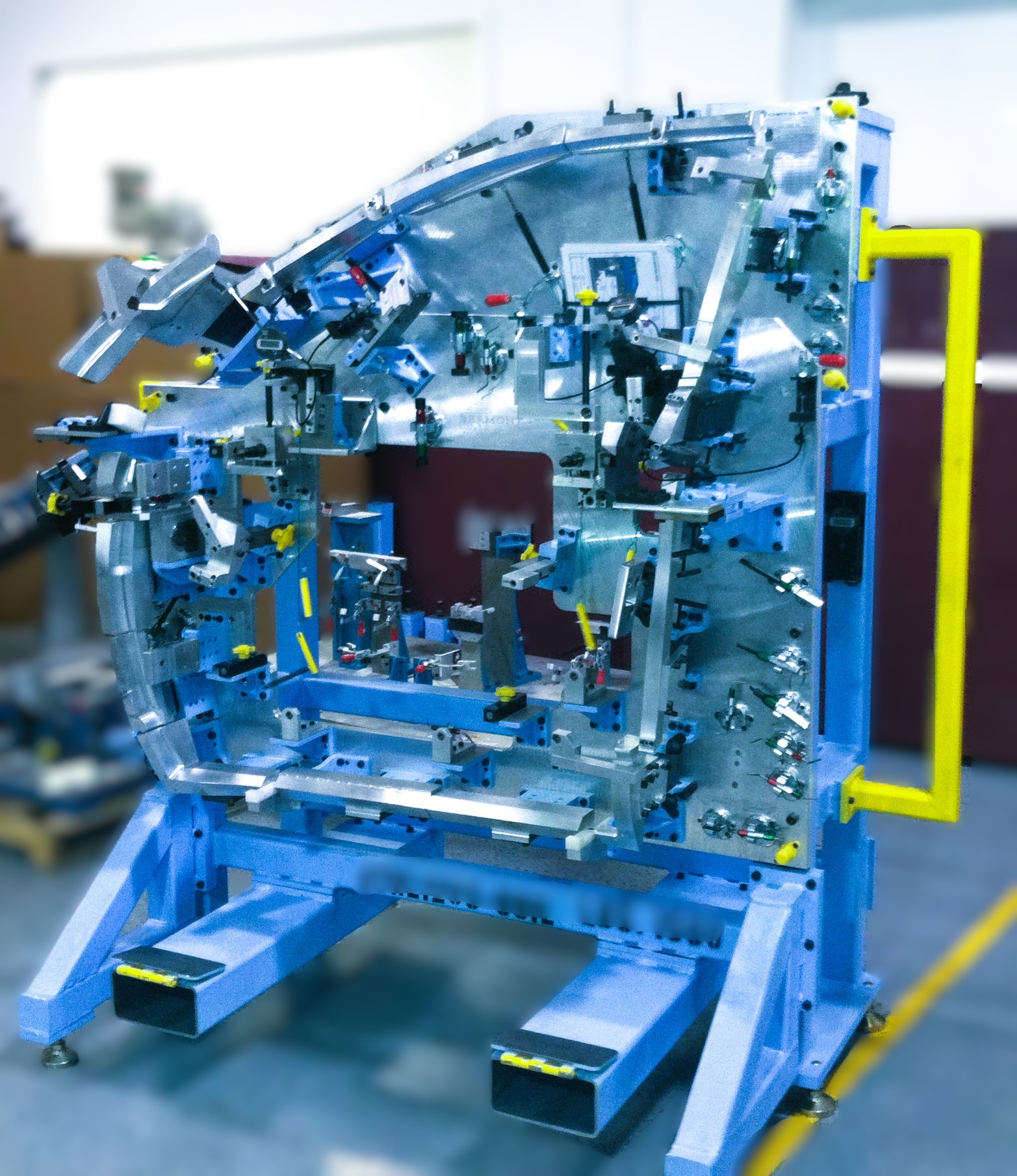
Checking Fixtures
Features and Function: Our checking fixtures are custom-designed tools used to hold and inspect parts, ensuring they meet dimensional and geometric specifications. These fixtures often incorporate error-proofing mechanisms (Poka Yoke) and can be automated with measurement sensors for real-time feedback, aligning with Industry 4.0 standards.
Benefits: Our checking fixtures are essential for quality control, providing engineers with the tools needed to verify part accuracy during and after production. By reducing rework and scrap rates, these fixtures enhance overall production efficiency. The real-time feedback offered by our automated fixtures allows for immediate process adjustments, ensuring compliance with Measurement System Analysis (MSA) regulations and maintaining high-quality standards in production.
Metrology Services
Features and Function: Our metrology services utilize advanced Coordinate Measuring Machines (CMM) and 3D scanners to measure complex geometries and fine tolerances with exceptional precision. These services provide detailed inspection reports and data analysis, supporting quality assurance and process improvement.
Benefits: For engineers, accurate measurements are crucial in maintaining product quality and consistency. Our metrology services ensure high precision and accuracy, supporting the development and improvement of automotive components. By reducing downtime through quick and accurate measurements, these services contribute to overall production efficiency. Senior technical buyers will value the assurance of compliance with industry standards and the enhanced reliability of the final product.
Testing Services
Features and Function: Our comprehensive testing services include a range of mechanical and material tests, such as tensile, hardness, fatigue, and impact testing. These tests evaluate the physical and mechanical properties of parts and materials, ensuring they meet performance and safety standards.
Benefits: Our testing services are critical for verifying material properties and part durability, identifying potential issues before they affect production. Engineers will find these services invaluable for product development and improvement, ensuring that parts are reliable and safe for use in automotive applications. For senior technical buyers, the assurance of high-quality, durable components translates to increased customer satisfaction and reduced warranty claims, ultimately supporting the company’s reputation for excellence.
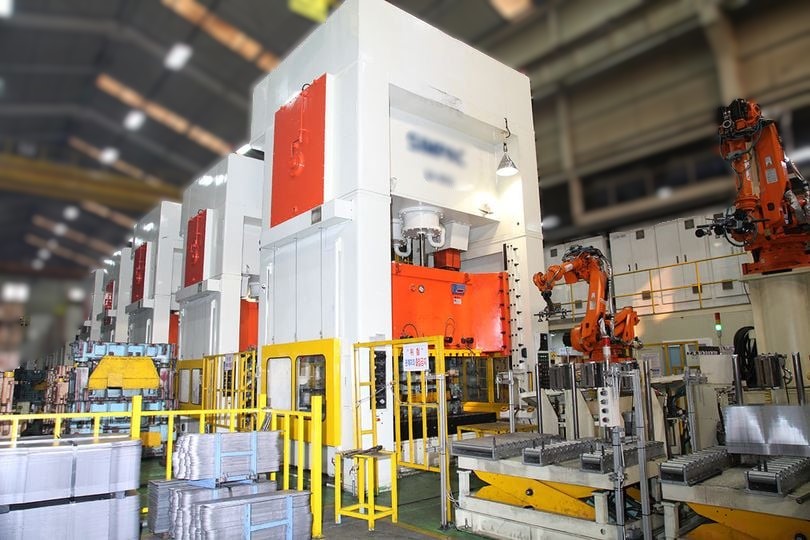
Production Cell
Hydraulic Stamping Presses
Features: Our hydraulic stamping presses are designed to deliver precise and consistent force across the entire stroke length. They are highly versatile and can accommodate various die types, including progressive, tandem, and transfer dies.
Technical Specifications:
- Force Capacity: Ranging from 100 to 3,000 tons, ensuring compatibility with a wide range of stamping operations.
- Stroke Length: Adjustable stroke lengths from 100 mm to 1,200 mm, providing flexibility for different part geometries.
- Bed Size: Large bed sizes up to 4,000 mm x 2,500 mm, allowing for the accommodation of large dies and complex part shapes.
- Speed: Variable speed control with a range of 5 to 30 strokes per minute (SPM), optimizing production efficiency.
Settings for Effective Operations:
- Pressure Control: Precise pressure settings are crucial for maintaining consistent force throughout the stroke. Operators can adjust the pressure settings to match the material type and thickness.
- Stroke Adjustment: The stroke length can be easily adjusted via the control panel to suit different die requirements and part geometries.
- Cushion Force: Hydraulic cushions are adjustable to provide the necessary support for deep drawing operations, preventing material wrinkling and ensuring part quality.
Benefits: Our hydraulic presses are ideal for operations requiring high precision and flexibility. Their adjustable settings ensure optimal performance across various stamping applications, making them suitable for both high-volume and low-volume production runs.
Mechanical Stamping Presses
Features: Mechanical stamping presses are engineered for high-speed, high-volume production. They utilize a crankshaft-driven system to deliver consistent and rapid force, making them ideal for progressive and tandem stamping operations.
Technical Specifications:
- Force Capacity: Available in capacities ranging from 50 to 2,500 tons.
- Stroke Length: Standard stroke lengths from 50 mm to 600 mm.
- Bed Size: Versatile bed sizes up to 3,500 mm x 2,000 mm.
- Speed: High-speed operation with rates up to 1,000 strokes per minute (SPM), maximizing production throughput.
Settings for Effective Operations:
- Stroke Rate: The stroke rate can be adjusted to balance between speed and precision, depending on the complexity of the part and the material being used.
- Clutch and Brake System: High-performance clutch and brake systems ensure precise control over the press operation, essential for maintaining quality and reducing cycle times.
- Die Height Adjustment: Quick and easy adjustment of die height ensures that the press can accommodate different dies without extensive downtime.
Benefits: Mechanical presses offer unmatched speed and efficiency, making them perfect for high-volume production environments. Their robust design ensures durability and long-term reliability, essential for continuous operations.
Servo-Driven Stamping Presses
Features: Servo-driven stamping presses combine the advantages of both hydraulic and mechanical presses, offering precise control and high-speed operation. These presses utilize a servo motor to drive the ram, allowing for programmable stroke profiles.
Technical Specifications:
- Force Capacity: Ranges from 100 to 2,000 tons.
- Stroke Length: Fully programmable stroke lengths from 50 mm to 1,000 mm.
- Bed Size: Accommodates large dies with bed sizes up to 3,800 mm x 2,200 mm.
- Speed: Variable speed with the ability to perform up to 600 strokes per minute (SPM).
Settings for Effective Operations:
- Programmable Stroke Profiles: Operators can program specific stroke profiles to optimize each stage of the stamping process, enhancing precision and reducing wear on the dies.
- Force Control: The servo motor allows for precise force control at every point of the stroke, ensuring consistent part quality.
- Energy Efficiency: Servo-driven presses are designed to consume less energy, making them cost-effective and environmentally friendly.
Benefits: Servo-driven presses offer the highest level of control and flexibility, making them ideal for complex and high-precision stamping operations. Their programmability and energy efficiency provide significant advantages in terms of operational costs and product quality.
Transfer Stamping Presses
Features: Transfer stamping presses are specifically designed for operations involving transfer dies. These presses feature automated transfer systems that move parts between multiple stations within the press, enabling the production of large and complex parts.
Technical Specifications:
- Force Capacity: Available in capacities from 500 to 5,000 tons.
- Stroke Length: Adjustable stroke lengths from 200 mm to 1,500 mm.
- Bed Size: Extra-large bed sizes up to 5,000 mm x 3,000 mm to accommodate extensive die setups.
- Speed: Operates at speeds of up to 20 strokes per minute (SPM) for heavy-duty applications.
Settings for Effective Operations:
- Transfer System: Precise settings for the automated transfer system ensure smooth and accurate part movement between die stations.
- Synchronization: The press and transfer system are fully synchronized to maintain alignment and timing, critical for avoiding part defects and ensuring consistent quality.
- Cushion and Ejector Systems: Adjustable cushion and ejector systems provide the necessary support and part removal mechanisms, essential for maintaining part integrity during the stamping process.
Benefits: Our transfer stamping presses are engineered to handle the most demanding stamping operations, providing unmatched precision and efficiency. They are ideal for producing large, complex parts in medium to high-volume production runs, delivering consistent quality and operational reliability.